
Godrej Consumer Products (GCPL) had a disappointing third quarter (Q3FY25) with flat volumes (after 7 per cent growth H1FY25). Price hikes will be required to maintain margins to offset the cost of palm oil inflation. However, some analysts see Q3 as an exception with strong volume growth expected to resume and it may be the fastest growing FMCG player in FY26.

FMCG major Hindustan Unilever Ltd on Wednesday reported a 19.18 per cent rise in consolidated net profit at Rs 2,989 crore in the December quarter.

'I now see rates rising again, particularly after recent losses - especially the January wildfires in Los Angeles.'

'The way the bank is doing in the past 4-5 quarters, no reason to see why we will not be able to achieve that.'

Leading passenger vehicle maker Maruti Suzuki on Saturday reported marginal growth while Hyundai and Tata Motors posted a decline in their sales in February as a slowdown in the market continued with demand remaining muted. On the other hand, Mahindra & Mahindra and Toyota Kirloskar Motor posted double-digit growth riding on their SUV and MPV models.

Stopping SIPs during a downturn undermines the benefit of rupee-cost averaging.

Automobile retail sales in India rose 13 per cent year on year in February with all the segments, including passenger vehicles and two-wheelers, witnessing robust offtake, dealers' body FADA said on Thursday. Overall retail sales stood at 20,29,541 units last month as compared to 17,94,866 units in the year-ago period. Passenger vehicle sales grew 12 per cent to 3,30,107 units last month as against 2,93,803 units in February 2023.

Apollo Hospitals Enterprise is set to expand presence in metro cities during FY26 with the addition of five hospitals that would add over 1,400 beds.

Info Edge (India) topped expectations in its October-December quarter (Q3) results, posting strong revenue and profit growth. Its shares have rallied as much as 6.14 per cent in two days. The technology holding company's revenue rose 15.2 per cent year-on-year (Y-o-Y) to Rs 722.3 crore, driven by robust performance across its key verticals, particularly its recruitment business.

Net flows from domestic institutional investors crossed Rs 5 trillion for the first time during a calendar year.

The October-December quarter (Q3FY25) results of fast moving consumer goods (FMCG) major Hindustan Unilever (HUL) indicated weak demand, with urban growth muted and rural showing recovery. Consolidated revenue grew by 1.6 per cent (volume was flat) to Rs 15,818 crore, due to price hikes. Prices of key raw materials such as palm oil and tea remained elevated, leading to compression of gross margin.
The Reserve Bank on Monday said asset quality of banks improved further and their gross non-performing assets (GNPA) or bad loans ratio declined to a 12-year low of 2.6 per cent in September 2024 on the back of falling slippages and steady credit demand. The RBI also flagged concern over a sharp rise in write-offs, especially among private sector banks (PVBs), which could be partly masking worsening asset quality in unsecured lending segment and dilution in underwriting standards.

After trying to make a dent in the cola market with Campa by offering higher trade margins to the supply chain, Reliance Consumer Products is betting on the same strategy to capture the chips, namkeen, and biscuits market in the country's booming snacks sector.

Private sector banks that announced their earnings for the October-December quarter (Q3) of 2024-25 (FY25) reported a rise in credit costs due to higher provisions, mainly for unsecured retail loans.
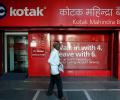
Kotak Mahindra Bank's net interest margin is likely to swell after the Reserve Bank of India (RBI) lifted its restrictions on the private lender that barred it from issuing fresh credit cards and onboarding new customers through digital mode, brokerages said on Thursday. The bank's net interest margin (NIM) has seen a decline of over 35 basis points (bps) since the restrictions were imposed by the regulator in April 2024.

Investors should avoid making drastic changes to their asset allocation during a market correction.

Traversing from being just vehicle manufacturers to mobility solutions providers amid a raging debate over which eco-friendly technology must be incentivised, the Indian automobile industry is driving in the new year under the shadow of a slowdown in sales with the post-pandemic pent-up demand in distant memory. The shift in the auto industry -- where advanced technologies like autonomous driving, vehicle intelligence, connected features and electrification are quickly gaining traction -- will be reflected in the upcoming Bharat Mobility Global Expo in which India's flagship Auto Expo has been clubbed to be held from January 17-22, 2025 in Delhi-NCR.

Among the new entries, the largest by market capitalisation are LIC, Avenue Supermarts (DMart), Adani Green Energy, Zomato and Jio Financial Services.

India's industrial production (IIP) growth slowed to 3.5 per cent year-on-year in October 2024, mainly due to poor performance of mining, power and manufacturing, as per official data released on Thursday. The IIP recorded a growth of 11.9 per cent in October 2023, according to a statement by the Ministry of Statistics & Programme Implementation.

The majority of active largecap funds are set to outperform for the second year in a row in 2024, thanks to the strong performance of their midcap and smallcap allocations.

Value mutual funds have witnessed robust investor interest, garnering Rs 22,757 crore in inflows in 2024, nearly double the amount seen in 2023, fueled by impressive returns generated by the segment. This surge reflects a shift in investor focus towards fundamentally strong yet undervalued stocks.

Escalating trade tensions amid a tariff war after Donald Trump took over as President of the United States (US) could adversely impact global growth and fuel inflation, an article on the "State of the Economy" in the Reserve Bank of India (RBI) monthly bulletin said.

Equity mutual funds witnessed a remarkable surge in inflows to nearly Rs 4 lakh crore in 2024, more than double the amount recorded in the preceding year, reflecting strong investor confidence and a continued shift towards long-term investing, particularly through Systematic Investment Plans (SIPs).

Credit card spending reached Rs 2 trillion in October, a 14.5 per cent rise from September, largely driven by festival season purchases. However, the volume of outstanding credit cards increased only marginally during the same period. The spike in spending comes at a time when nearly all major credit card issuers are calibrating their growth in the segment due to visible signs of stress.

Dalal Street minnows stole the show in 2024, giving handsome returns to investors, helped by a largely optimistic trend in the stock market and impressive retail investors' participation. Analysts attributed the positive trend in the equity markets, where the benchmark indices shattered many records this year, to robust domestic liquidity, strong fundamentals of the Indian economy, and policy continuity.

Siemens delivered a strong margin performance and also reported high other income to beat consensus in the January-March quarter (Q2) of FY24 (the company's year-end is September 30). In addition, it has opted to demerge the energy vertical with a 1:1 award of shares in the newly demerged entity which will be listed by the end of this year (CY25).

Markets to track inflation data, global trends, FII trading this week: Analysts New Delhi, Dec 8 (PTI) Investors' sentiments will be guided by a host of domestic and global macroeconomic data announcements this week, along with the trading activity of foreign investors and trends in world stocks, analysts said. Besides, the rupee-dollar trend and movement of global oil benchmark Brent crude will also be crucial in dictating terms in the market, experts added. "The domestic stock market is likely to be shaped by a mix of global cues, domestic economic indicators, and the flow of investments from foreign and domestic institutional investors. Key factors like the rupee's exchange rate and crude oil prices will play a critical role in determining market trends. "Globally, geopolitical tensions, particularly the ongoing Russia-Ukraine conflict, continue to pose challenges. However, recent declines in the dollar index and US bond yields have created a more favourable environment for emerging markets like India," Pravesh Gour, Senior Technical Analyst, Swastika Investmart Ltd, said. On the economic front, significant macroeconomic releases, including retail inflation and industrial production data from India as well as US core CPI, are expected to influence overall market sentiment, Gour added. Last week, the BSE benchmark jumped 1,906.33 points or 2.38 per cent, and the NSE Nifty climbed 546.7 points or 2.26 per cent. "FIIs turning buyers in early December, in a total reversal of their sustained selling strategy during the last two months, has altered the market sentiments. The change in FII (Foreign Institutional Investors) strategy is getting reflected in stock price movements, particularly in large-cap banking stocks in which FIIs have been sellers," VK Vijayakumar, Chief Investment Strategist, Geojit Financial Services, said. The release of US CPI inflation data will give some insights into the Fed's December meeting, an expert said. "The markets' attention is expected to turn towards macroeconomic indicators like IIP and CPI inflation. Additionally, the trend of FII inflows, following their recent buying spree, will remain a key focal point for market participants," Ajit Mishra - SVP, Research, Religare Broking Ltd, said. Siddhartha Khemka, Head - Research, Wealth Management, Motilal Oswal Financial Services Ltd, said this week will see significant economic data releases, including GDP numbers from Japan and the UK, along with China's CPI and India's CPI.

'Adventure travel, cultural tours, and wellness retreats are in high demand.'

Dabur's pre-quarterly update for Q3FY25 disappointed the market with the share dropping by 3.9 per cent. Growth was slower than expected and inflation hit margins. The management said that the fast-moving consumer goods (FMCG) consumption in rural markets was resilient and continued to grow faster than in urban markets.

India's used car market, which has been growing steadily at 10-12 per cent over the last 2-3 years, is expected to reach $40 billion in FY26.

Reliance Industries Ltd on Thursday reported a 7.4 per cent rise in its December quarter net profit, as its retail business rebounded and telecom earnings rose. Its consolidated net profit of Rs 18,540 crore, or Rs 13.70 per share, in October-December - the third quarter of April 2024 to March 2025 fiscal (FY25) - compared to Rs 17,265 crore, or Rs 12.76 a share, in the same period a year back, according to a stock exchange filing by the company.

Balance-level delinquencies in the credit card segment saw a 17 basis points (bps) year-on-year (Y-o-Y) rise in the quarter ending June 2024 (Q1FY25). In all other credit segments, including personal loans, delinquencies declined even as retail credit growth moderated, consequent to banks tightening the supply of credit to the unsecured segments, a report by TransUnion CIBIL said on Monday. Data shows that balance-level delinquencies, measured in terms of 90 days or more past due, in the credit card segment stood at 1.8 per cent in Q1FY25- highest among all other credit segments.

Shares of Bajaj Finance surged over 6 per cent on Thursday after the diversified non-banking finance company reported an 18 per cent increase in consolidated net profit to Rs 4,308 crore for the December quarter. The stock rallied 6.33 per cent intraday to touch Rs 8,249.95 - a 52-week high -- on the BSE.

'However, this process will take some time. Depending on the approval timeline, it may span a few quarters.'

The July-September quarter (Q2) results for 2024-25 (FY25) from the largest listed consumer electrical solutions companies, Havells India and Polycab India, followed similar trends, demonstrating robust revenue growth while falling short of profitability expectations. Both companies witnessed overall growth in the 16-30 per cent range, but margins declined by 130-290 basis points (bps) year-on-year (Y-o-Y). Although brokerages are bullish on long-term prospects and have raised revenue projections, earnings forecasts have been revised downward due to margin pressures.

Maruti Suzuki, Tata Motors, Mahindra & Mahindra, Hyundai and MG Motors are gearing up to introduce EVs in India.

Propelled by strong demand and lower costs, the country's largest airline, InterGlobe Aviation (IndiGo), reported solid operational performance in the 2024-25 (FY25) October-December quarter (Q3). While demand was driven by the festival season, year-end increase, and higher consumer spending, lower fuel and rental costs helped deliver a beat at the operating profit level.

Mahindra & Mahindra (M&M) reported very strong results for the January-March quarter of the last financial year (Q4FY24), beating consensus comfortably. The margins of the automobile business improved 170 basis points (bps) year-on-year (Y-o-Y) to 8.8 per cent, while FES (Farm Equipment Sector) margins improved to 15.8 per cent (up 60 bps Y-o-Y), despite a decline in volumes due to cost optimisation and lower raw material costs.

India's economic growth rate decelerated to 6.2 per cent in the October-December quarter this fiscal, mainly due to poor performance by mining, manufacturing and all other sectors, with the exception of agriculture. However, on a sequential basis, the economic growth rate in the third quarter showed improvement over 5.6 per cent recorded in the second quarter.

Largecap companies are generally less vulnerable to economic slowdowns than their mid- and smallcap counterparts.
